

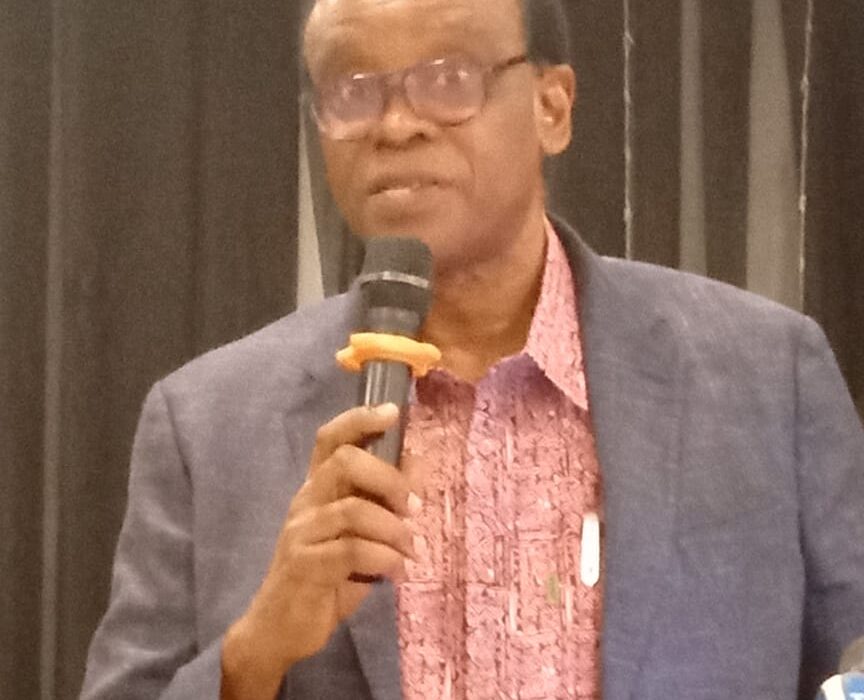
Executive Director, Health of Mother Earth Foundation (HOMEF) has called on the Federal Government to declare a state of emergency on the Niger Delta environment and immediate steps steps for the cleanup of the entire area.
Bassey made the call in Port Harcourt, Rivers State while delivering the Keynote address at the 2026 Correspondents’ Week of the Correspondents’ Chapel of the Nigeria Union of Journalists NUJ, Rivers State Council organized in support from Renaissance Africa Energy company Limited, NLNG and Kebetkache Women Development Centre..
The event had the theme: “The Imperatives of Comprehensive Cleanup of the Niger Delta Environment: Role of the Media.”
He stressed that their was no better time to cleanup the entire Niger Delta than now while crude oil is still maintains some values globally warning that once oil loses it global value and appeal both government and oil companies will lack the motivation to repair decades of ecological damage in the Niger Delta.
“We all know that the Niger Delta is one of the top 10 most polluted places on planet earth. And to clean up the Niger Delta will be the biggest clean up exercise anywhere in the world.
“We have been struggling with the Ogoni clean-up but it is appropriate to say that now is the best time not just to talk about the clean up of the whole Niger Delta but to actually the processes of auditing the environment in terms health impacts, in terms of pollution impacts and then putting aside money to begin to clean up the area”, he said.
Bassey raised the alarm in Port Harcourt while delivering the keynote address at the 2026 Correspondents’ Week of the Correspondents’ Chapel of the Nigeria Union of Journalists,
He also cautiond that once oil loses global value, both government and oil companies may lack incentive to repair decades of ecological damage in the Niger Delta.
“So, now, the issue of transiting away from oil, whether we like it or not, oil will one day be phased out. Now, when that happens, what will happen to Nigeria?” he asked.
“Is it when oil is no longer needed, we’re going to find money to clean the Niger Delta? No, we will not. If the Niger Delta is not clean now, when people are still buying oil, then we are sold.”
Bassey insisted that cleanup must happen while oil still generates profit, warning against what he described as a looming “post-oil abandonment risk.”
He also accused oil firms of escaping accountability through corporate restructuring and divestment, stressing that environmental responsibility must not be transferred to new operators.
“Clean up the mess. Nobody has the right to poison my water, poison my soil, poison my air, and then run away to the bank with profits. That is totally immoral and unacceptable.”
“And we have to say that whether it’s NNPCL, Shell, Chevron or Renaissance.”
The activist faulted the dominant narrative that oil spills in the Niger Delta are mostly caused by sabotage, insisting that ageing infrastructure is a major factor.
“When you see rotten pipelines, pipelines put in such exposed places, not protected, they are not replaced when they are meant to be replaced, because every pipe itself has a time to expire.”
“And then it just sounds silly to blame every spill on vandalism whereas your pipelines laid over 50 years ago are obsolete, expired and ought to be replaced.”
He also questioned official explanations for pipeline failures, arguing that spill patterns often contradict sabotage claims.
“If I’m going to dig six feet into the ground and then bust the pipe, I will not bust it from under the pipe, would I?”
Bassey further argued that Nigeria was economically stronger before oil dependence, saying crude wealth weakened agriculture and distorted national development priorities.
“Nigeria was better off without oil… We had agriculture. Nigeria was the main exporter of food before oil became a major revenue earner.”
He described extractive oil economics as a continuation of colonial-era production systems that prioritize export over local survival.
“Extractivity is colonial… you are planting cotton and cocoa and you don’t make chocolate. You export and make money with no food to feed yourself.”
On gas flaring, Bassey said Nigeria has failed to enforce court rulings and environmental laws that prohibit the practice despite its long-term health impact.
“The issue of gas-flaring is currently about to appear in the ECOWAS Court… gas-flaring was declared illegal and against the constitutional right to life.”
He added that communities are forced to seek justice abroad because domestic systems fail to hold polluters accountable.
“That’s why communities tend to go to foreign courts… they are divesting to evade responsibilities.”
Bassey urged journalists to intensify environmental reporting, warning that silence or weak coverage benefits polluters.
“The media must continue to expose ecological destruction in the Niger Delta factually and in real time.”
“The fact that we are holding this conference today is a message to the government at all levels. They cannot keep on pretending that all is well because all is not well.”
